■ExplainerGlobal31 Oct 20267 min read
Foundayo sales miss forecasts as tirzepatide keeps Lilly ahead
Lilly's orforglipron pill nearly doubled its revenue but missed Wall Street by 44 million dollars, while weekly tirzepatide injections brought in about 16.1 billion dollars. The oral GLP 1 race has barely started.
Holds at Approved Mixed or neutral: news, but no net change in prospects.
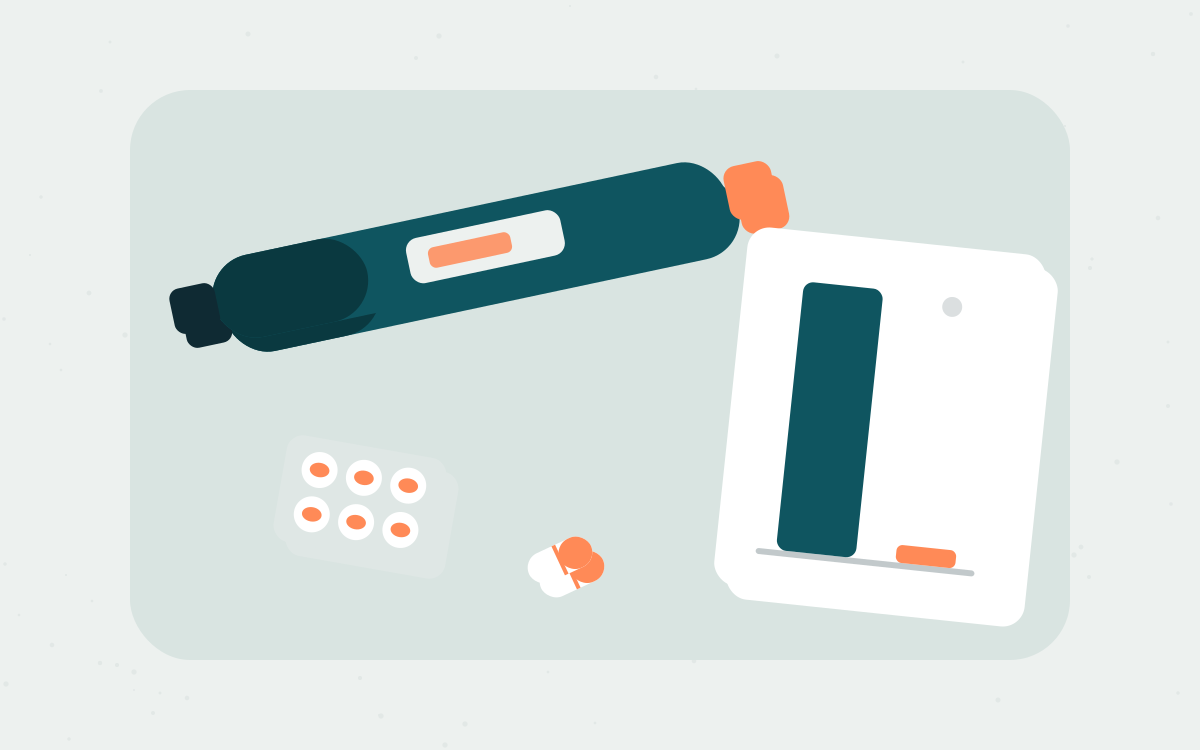
The readOrforglipron nearly doubled its revenue in its second quarter on sale but missed consensus and earned about 1 percent of what tirzepatide brought in. For now the oral small molecule adds to Lilly's franchise rather than pulling patients away from weekly peptide injections. Two quarters of launch data are too few to call the pill race.
Eli Lilly's Foundayo sales reached 184 million dollars in the third quarter of 2026, the company reported on October 29. That was the only product in its metabolic franchise to miss Wall Street forecasts, falling 44 million dollars short of consensus, according to BioPharma Dive. Foundayo is orforglipron, a once daily small molecule rather than a peptide, but it acts on the same GLP 1 receptor as the weekly injections that lead the class. Against tirzepatide, which earned about 16.1 billion dollars in the same quarter, the miss shows how early the pill contest still is.
What Lilly reported for Foundayo in the third quarter
Lilly's quarterly release lists the pill at 184 million dollars for the three months to September and 281 million dollars for the year to date. Subtracting one figure from the other implies roughly 97 million dollars before July. The FDA cleared Foundayo on April 1, 2026, after the first quarter had closed, and Lilly said shipping through its direct channel began on April 6, so that earlier revenue reflects a partial first quarter on the market. On that reading, revenue close to doubled from one quarter to the next. Analysts still wanted more. Consensus sat about 44 million dollars higher, which made orforglipron the one metabolic product to disappoint in a quarter when total revenue beat forecasts by 8 percent.
Chief executive David Ricks credited growth in part to "the global launches of Foundayo," alongside consumer demand for Mounjaro and Zepbound and wider US coverage for obesity care. The release does not split pill revenue by country, so it is not possible to say how much came from the United States or how many people are taking it. Lilly also highlighted a September readout in which Foundayo showed cardiovascular safety along with sustained A1C and weight reductions in what the company called its largest and longest type 2 diabetes study. That evidence supports a diabetes case, but it has not yet shown up in revenue. In Europe, the pill holds a positive CHMP opinion and still awaits a final Commission decision.
| Product | Molecule and form | Q3 2026 revenue | Change vs Q3 2025 | Against consensus |
|---|---|---|---|---|
| Mounjaro | Tirzepatide, weekly peptide injection | 10.7 billion dollars | Up 65 percent | Above a 10 billion forecast |
| Zepbound | Tirzepatide, weekly peptide injection | 5.4 billion dollars | Up 49 percent | Above a 5 billion forecast |
| Foundayo | Orforglipron, daily non peptide pill | 184 million dollars | New since April 2026 | 44 million below |
| Lilly total | All products | 24.4 billion dollars | Up 39 percent | Above 22.7 billion |
Tirzepatide still carries the Lilly incretin franchise
The weekly peptide did the heavy lifting again. Mounjaro brought in 10.7 billion dollars, up 65 percent on a year earlier, and Zepbound added 5.4 billion dollars, up 49 percent, with both beating the forecasts BioPharma Dive cited. Together the two tirzepatide brands earned about 16.1 billion dollars, so Foundayo sales equalled roughly 1.1 percent of that figure. For every dollar the pill earned in the quarter, the two tirzepatide brands earned about 87 dollars. Mounjaro revenue was split across regions, with 5.0 billion dollars in the United States and 5.7 billion dollars elsewhere, while Zepbound revenue came almost entirely from the US market. Our tirzepatide guidance raise story covers the injection side of the quarter in more detail.
For every dollar the pill earned in the quarter, the two tirzepatide brands earned about 87 dollars.
Lilly said it now holds 63 percent of the US market and 58 percent of the market outside the US for incretin drugs, the class that acts on GLP 1 and related metabolic hormones. Those shares belong overwhelmingly to tirzepatide, not to the pill. The lead matters because Novo Nordisk patents on Ozempic and Wegovy start to expire in 2031 and 2032, according to BioPharma Dive, and Lilly will need to keep adding to its position before then. A pill that wins large numbers of new patients would be one way to do that without asking anyone to inject. After two quarters on sale, the numbers do not yet show that happening, and the Lilly third quarter results offer no data on whether pill users are new to treatment or switching.
Pricing pressure and the Medicare Bridge program
Volume, not price, drove the quarter. Lilly reported that worldwide revenue rose 39 percent to 24.4 billion dollars on a 53 percent rise in volume, partly offset by a 15 percent fall in realized prices. In the United States, revenue grew 34 percent to 15.1 billion dollars while prices fell 7 percent, a decline the company tied mainly to Zepbound. Outside the US, revenue rose 47 percent to 9.3 billion dollars as prices dropped 29 percent, which Lilly linked mostly to Mounjaro joining China's national reimbursement drug list. The quarter also carried about 900 million dollars of benefits, including 410 million dollars in Jardiance milestones that Lilly said will not recur, plus favorable changes to rebate and discount estimates.
Investors had worried that Medicare's Bridge program, which began on July 1, and fast moving prices for weight loss drugs would cut into obesity revenue. RBC Capital Markets analyst Trung Huynh wrote that "strong execution across the GLP-1 franchise" was "more than offsetting pricing pressure," according to BioPharma Dive. Cantor Fitzgerald analyst Carter Gould said the results "should quell investor concerns over GLP-1 growth" in the near term. Lilly raised its 2026 revenue guidance to between 91 and 92 billion dollars, from 85 to 87 billion dollars after the second quarter. Those are company forecasts, not results. They also assume that lower prices keep pulling in enough new patients, a trade that has so far favored the injections far more than the daily tablet.
What the oral GLP 1 pill numbers mean for peptide rivals
For the peptide drugs on our board, the main reading is that an oral GLP 1 pill has not yet pulled meaningful demand away from weekly injections. That holds inside Lilly, where tirzepatide dwarfs Foundayo, and it is a useful marker for rivals such as Novo Nordisk, whose oral semaglutide is a peptide tablet that relies on an absorption enhancer and fixed timing around meals. Lilly says orforglipron can be taken at any time of day without food or water restrictions, yet that convenience has not turned into large revenue so far. Two quarters is a short window, and Lilly has not said how many prescriptions Foundayo has drawn. A modelled comparison with oral semaglutide gave the Lilly pill only a narrow clinical edge.
Several facts remain unknown. The release gives no separate outlook for Foundayo sales in 2026, and it does not show how pill revenue splits between the US and other countries. Nor is it clear how much of the consensus miss reflects slower uptake rather than optimistic analyst models. The wider incretin pipeline keeps moving in the meantime. Lilly said Phase 3 trials of EloraTZP, its amylin and tirzepatide combination, are set to start in the fourth quarter of 2026, and retatrutide recently beat the top Ozempic dose head to head in type 2 diabetes. Both are injected peptides. If they reach patients, the pill could end up as an entry or maintenance option beside them rather than the main engine of growth.
Conclusion
Foundayo sales nearly doubled in the pill's second quarter but missed forecasts and remain about 1 percent of tirzepatide revenue. On this evidence, the weekly peptide injections still set the pace for Lilly, and the oral small molecule has not changed the race for peptide rivals. Lilly's fourth quarter report, the European Commission decision on orforglipron and any disclosure of prescription numbers are the next checkpoints. Until then, the pill's commercial role is a question, not an answer.
Lilly's fourth quarter 2026 report and any disclosure of Foundayo prescriptions or country split, plus the European Commission decision that follows the positive CHMP opinion.
Primary sourceEli Lilly third quarter 2026 financial results release, October 29, 2026; BioPharma Dive earnings roundup, October 30, 2026
Sources
- Lilly reports third-quarter 2026 financial results, raises full-year guidance
- Earnings roundup: Lilly's unwavering momentum, Novartis' rebound and GSK's waiting game (BioPharma Dive)
- FDA approves Lilly's Foundayo (orforglipron) (Lilly release as reposted by HFSA)
- Foundayo (Orforglipron) Approval Marks the Beginning of the Oral GLP-1 Era for Obesity Treatment (2 Minute Medicine)
Spotted an error? Tell us through the contact form; corrections follow the corrections policy.