▼ExplainerUK6 min read
Mounjaro price increase moved UK self pay patients toward Wegovy in a study of one million adults
A Diabetes, Obesity and Metabolism study of more than one million UK self pay patients found Wegovy starts and switches from tirzepatide jumped when Lilly raised its UK list price in September 2025. Weight loss on tirzepatide stayed higher, but the arms were not randomised.
Holds at Approved A rejection, a miss or a delay that pushes patients further away.
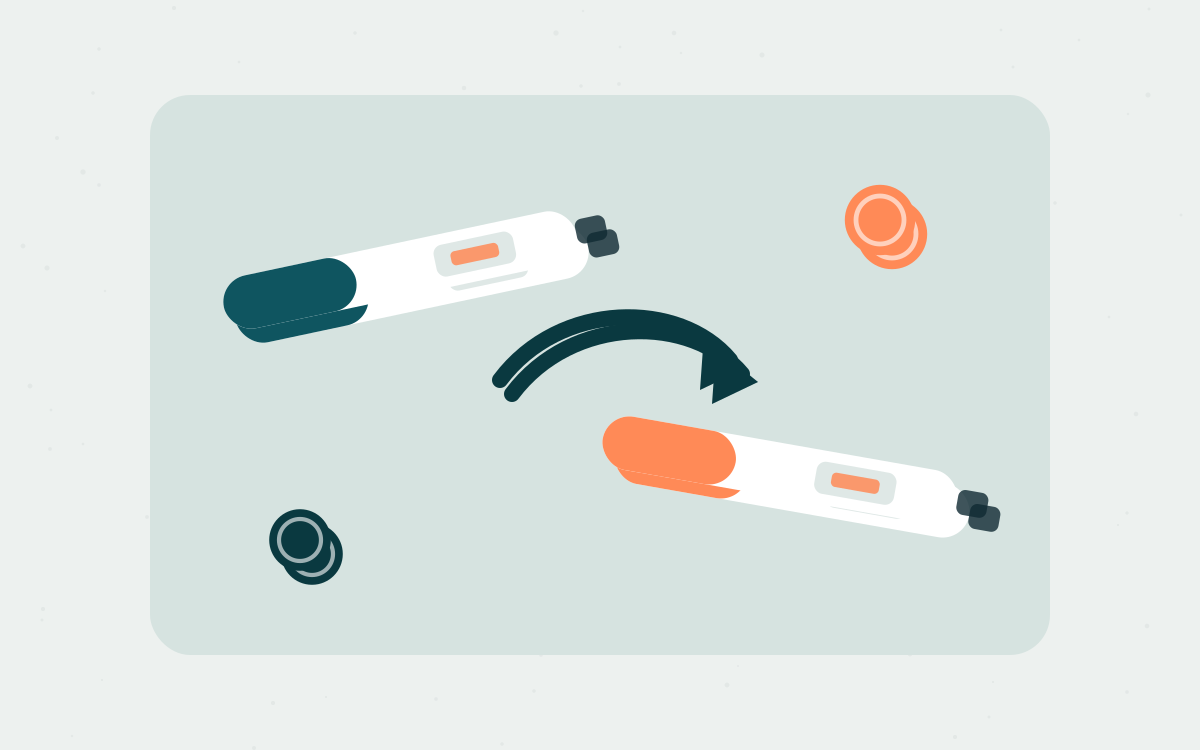
The readPrivate UK demand for tirzepatide bends with price: a list price rise moved Wegovy from a niche choice to about 40 percent of new starts in one service. Tirzepatide still led on weight loss, but the comparison is observational and the data come from one company.
The September 2025 Mounjaro price increase in the UK changed which weight loss drug private patients chose, according to a study of more than one million self pay adults. Starts on Novo Nordisk's Wegovy rose sharply against the projected trend, and some tirzepatide users switched across. The data come from one company's online prescribing service, which limits how far they travel.
What the study tracked
The paper, published online on October 14 in Diabetes, Obesity and Metabolism and reported by The Pharmacist this week, was written by researchers at the telehealth company HeliosX and the consultancy LCP Health. They took every adult who began semaglutide or tirzepatide through the company's UK online service between May 1, 2024 and January 1, 2026: 1,033,522 people in all. Tirzepatide, sold as Mounjaro, dominated, with 932,659 starts, or 90.2 percent, against 100,863 for semaglutide. Women made up close to 80 percent of users. The team used interrupted time series models, a method that projects the earlier trend forward and measures how far the real numbers depart from it once a change lands.
The change in question was Eli Lilly's UK list price rise for tirzepatide, which the authors describe as up to 170 percent and which took effect in September 2025. Private buyers in the UK pay the full cost themselves, so the price feeds straight into their choices. The study also followed weight over time with mixed effects models, which estimate an average path for each group while allowing for patients who drop out early. Because everyone in the data paid privately through one service, the cohort cannot stand in for NHS patients, who get the drugs under different rules and do not pay list prices themselves.
| Measure | Before or overall | After the price rise |
|---|---|---|
| Adults in the cohort | 1,033,522 | |
| Tirzepatide share of starts | 90.2% overall | |
| Wegovy share of new starts | 4% in July 2025 | 40% by October 2025 |
| Monthly switching from Mounjaro | 0.1% in July and August | 10.4% in October |
| Wegovy starts against trend | Up 31.15 points in September |
How fast patients moved
The shift was quick. In September 2025, semaglutide starts ran 31.15 percentage points above the level the earlier trend predicted, with a 95 percent confidence interval of 26.07 to 36.24. Switching from tirzepatide to semaglutide rose by 9.26 points, with an interval of 7.09 to 11.42, and then eased in later months. According to The Pharmacist, Wegovy's share of new starts climbed from 4 percent in July to 40 percent by October, while the monthly share of users moving from Mounjaro to Wegovy went from 0.1 percent to 10.4 percent. The authors also saw part of the move begin in August, before the new price applied, which they read as patients acting on the announcement.
In September 2025, semaglutide starts ran 31.15 percentage points above the level the earlier trend predicted, with a 95 percent confidence interval of 26.07 to 36.24.
The study links the shift to a widening price gap at the service. The average price of a Wegovy starting dose fell from 116 to 101 pounds over the period, while the Mounjaro starting price rose from 143 to 157 pounds. Lead author Sophie Dix, who heads medical affairs at the company, said the work "highlights just how important affordability is becoming in the decisions people make about their weight-loss treatment." That is a fair reading of the numbers, but the study cannot separate price from other forces in the same months, such as media coverage of the Mounjaro price increase or changes in the service's own marketing.
Weight loss on each drug
The paper also reports weight results. At 12 months, estimated weight loss was 19.93 percent on tirzepatide, based on 30,763 people with follow up, and 16.40 percent on semaglutide, based on 979. Both numbers are large, but they are not a head to head result. They describe what happened to people who chose each drug, not what either drug would do for the same patient. Patients chose their drug, the semaglutide group with a year of data is small, and people who stop early tend to drop out of such estimates. The authors note that the weight figures come from patients who kept sending follow up data, with limited lifestyle support around the prescriptions.
The direction matches other evidence on this board. A Cleveland Clinic records study found that switching to tirzepatide added weight loss over two years, while moving the other way cost some. In this UK cohort, then, a share of patients traded the drug with the larger average effect for a cheaper one. Whether that choice cost them weight over the following year is the open question the paper does not answer. The study reports no switch outcomes by drug sequence, no side effect data and no measure of how many patients stopped treatment altogether once the Mounjaro price increase reached them.
What it means for tirzepatide
For Lilly, the data show that UK private demand for tirzepatide is price sensitive at the margin, even if the drug still led starts overall. Studies like this one are real world evidence: strong on behaviour, weaker than trials on drug effect. Ben Bray, a partner at LCP Health and the senior author, said the self pay market "is evolving and expanding rapidly, but there remains a need for more real-world evidence to better understand what drives patient behaviour." Price fights are appearing elsewhere too, as with the efpeglenatide launch in Korea, and access cuts can move prescriptions even harder, as US Medicaid data showed.
The full methods and confidence intervals are in the study abstract on Europe PMC. Readers should keep the funding and data source in mind: the authors work for or with the company whose sales records they analysed, and the cohort reflects that service's pricing, not the whole UK market. The study also says nothing about NHS prescribing, where list prices do not reach the patient directly. Even so, a cohort of this size gives a clear picture of how private buyers reacted in the months after the change, and it supplies the first published estimate of how many switched as a result.
Conclusion
The Mounjaro price increase did not end tirzepatide's lead in UK self pay care, but it moved a measurable share of new and existing patients to Wegovy within weeks. Weight results still favoured tirzepatide, without randomisation. The next checkpoint is whether switchers kept their weight off over the following year.
Follow up on whether patients who switched to Wegovy kept their weight off, and any similar data from other UK providers or the NHS.
Primary sourceDix S et al, Diabetes, Obesity and Metabolism, published online Oct 14, 2026 (PMID 42875827); The Pharmacist, Nov 24, 2026
Sources
Spotted an error? Tell us through the contact form; corrections follow the corrections policy.